Mapping the Cyber Attack Surface of Connected Autonomous Vehicles
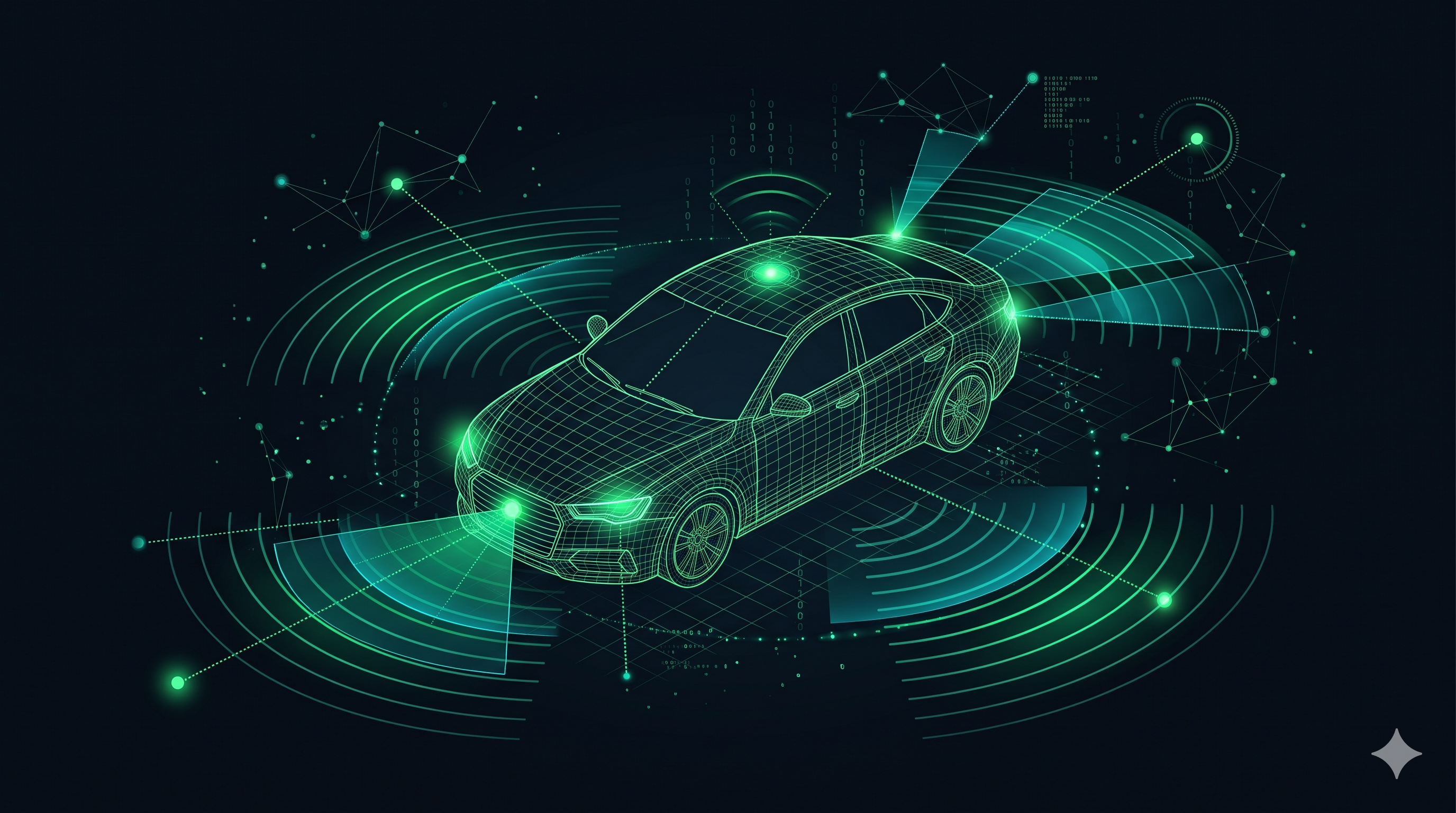
Automobiles used to be closed mechanical systems where physical access was required to tamper with vehicle behavior. Today, connected autonomous vehicles rely on dense networks of electronic control units, lidar, radar, cameras, and wireless links to perceive the road and coordinate with surrounding traffic. That connectivity turns every wireless interface and sensor node into a potential entry point for remote intrusion.
In-Vehicle Network and Sensor Vulnerabilities
Inside the vehicle, subsystems communicate over internal buses such as the Controller Area Network alongside short-range wireless protocols. Because internal automotive buses were originally designed for reliability rather than adversarial security, several attack vectors emerge:
Remote Sensor and GPS Spoofing: Autonomous navigation depends on accurate readings from radar, lidar, cameras, and GPS receivers. Attackers can broadcast fraudulent GPS signals stronger than genuine satellite transmissions to falsify location timestamps, or interfere with optical and ultrasonic sensors to distort obstacle detection.
Close-Proximity Wireless Exploits: Short-range interfaces create localized entry points. Bluetooth stacks can suffer from memory corruption bugs that allow paired devices to reach engine control units. Tire Pressure Monitoring Systems often transmit unencrypted signals that can be spoofed or drained, while keyless entry fobs remain vulnerable to signal jamming in public parking areas.
ECU Firmware Flashing: Unauthorized access to diagnostic ports or internal buses enables attackers to flash malicious firmware onto electronic control units, directly altering steering, braking, or powertrain commands.
Vehicle-to-Everything Network Attacks
When vehicles exchange safety messages with nearby cars, smartphones, and roadside units over WiFi, Bluetooth, or cellular links, they inherit classic distributed network threats:
Denial of Service and Channel Jamming: Flooding communication nodes with junk traffic delays critical safety messages. In autonomous driving, even a fraction-of-a-second delay in collision warnings can cause an accident.
Sybil and Impersonation Attacks: Every connected vehicle broadcasts a unique identifier. An attacker can forge multiple fake vehicle identities to fabricate phantom traffic jams or alter legitimate safety alerts.
Replay and Routing Manipulation: Adversaries can capture valid network packets and retransmit them later to confuse traffic controllers. Within multi-hop vehicular networks, compromised nodes can also launch blackhole or greyhole routing attacks that selectively drop safety packets.
Roadside Infrastructure Risks
Autonomous ecosystems extend beyond the chassis to smart traffic signals, roadside units, traffic cameras, and cloud backends. Compromising these shared infrastructure nodes allows attackers to broadcast falsified road conditions across entire intersections at once, making end-to-end authentication across both vehicles and infrastructure mandatory.